Classes of Fire Explained: Types of Fire in India and How to Choose the Right Extinguisher
Hyderabad, India –
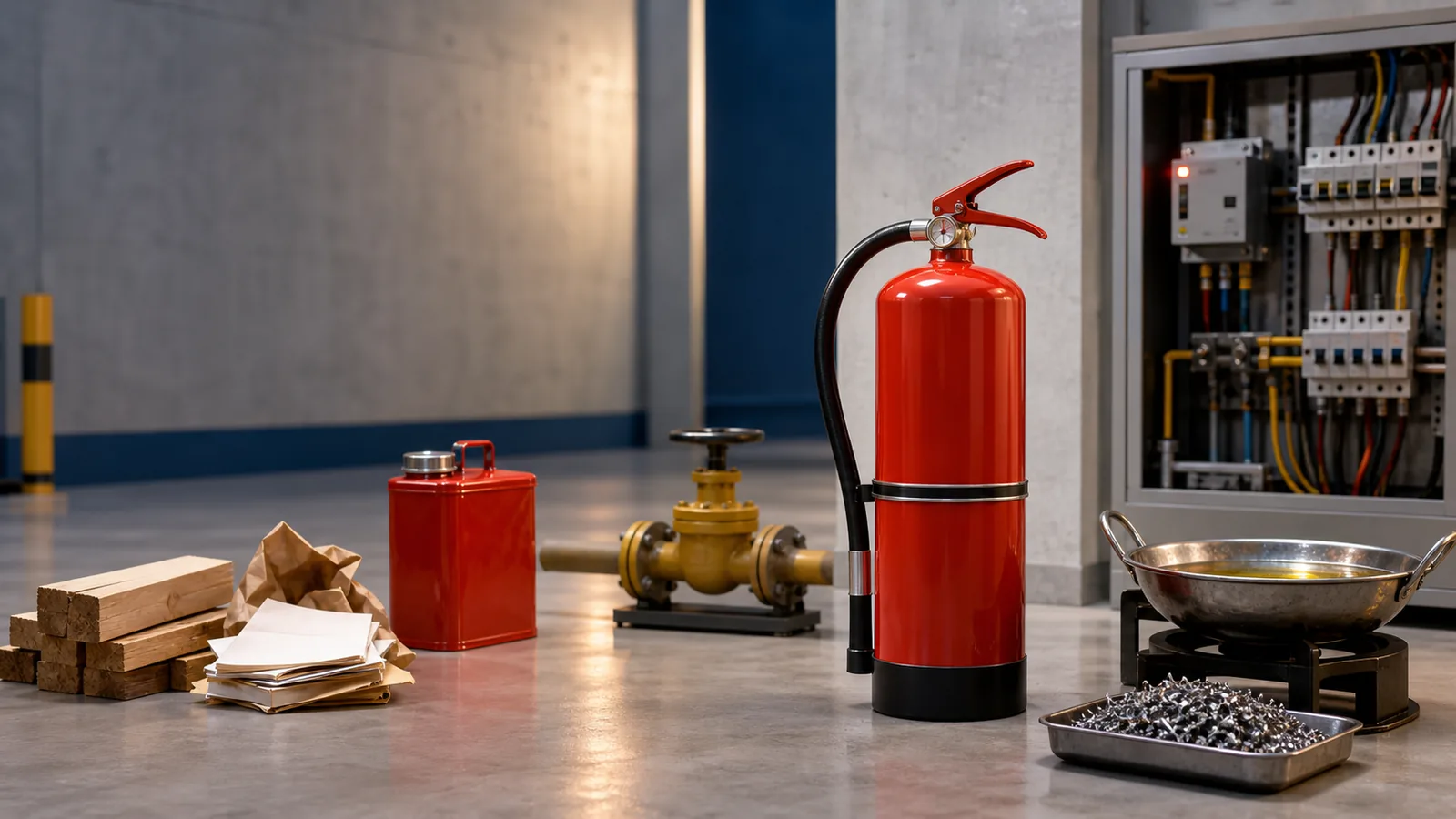
Not every fire is the same. A fire in a paper storage area is very different from one involving diesel, LPG, live electrical equipment, metal dust or cooking oil.
Fire safety therefore starts with one question: what material is burning? Once the fuel is identified, the correct extinguisher and response can be selected. Using the wrong extinguisher can spread the fire, damage equipment or put the user at serious risk.
This guide explains the main classes of fire used in Indian fire-safety practice for offices, factories, warehouses, commercial kitchens, institutions and other buildings.
Quick Answer: What Are the Main Classes of Fire?
BIS product guidance for IS 15683:2018 recognises Class A, B, C, D and F fire tests. Live electrical equipment is best treated as a special shock and equipment hazard rather than a separate fuel class.
| Fire class | What is burning | Common examples | Common extinguisher type |
|---|---|---|---|
| Class A | Solid materials | Wood, paper, cloth, rubber and some plastics | Water, foam or ABC powder |
| Class B | Flammable liquids | Petrol, diesel, paint, oil and solvents | Foam, CO₂ or suitable dry powder |
| Class C | Flammable gases | LPG, CNG, propane, butane and acetylene | Suitable dry powder after safe fuel isolation |
| Class D | Combustible metals | Magnesium, sodium, titanium and aluminium powder | Special Class D powder for the specific metal |
| Class F | Cooking oils and fats | Deep-fryer oil and hot cooking fat | Wet chemical |
| Electrical risk | Energised equipment | Panels, wiring, servers, motors and switchboards | CO₂, clean agent or suitable dry powder |
Class A Fire: Solid Materials
Class A fires involve ordinary solid materials that normally leave ash after burning.
- Wood
- Paper and cardboard
- Cloth
- Rubber
- Some plastics
- Furniture and packaging material
These fires are common in offices, warehouses, schools, hospitals, factories and homes. Cooling is important, so water-based, foam and ABC dry-powder extinguishers may be suitable depending on the location and surrounding risks.
Class B Fire: Flammable Liquids
Class B fires involve flammable liquids or materials that melt and burn like a liquid.
- Petrol and diesel
- Paint and thinners
- Solvents
- Certain oils
- Industrial chemicals
These fires can spread quickly because liquid flows across floors and surfaces. Water should generally not be used because it may spread the burning liquid. Foam, CO₂ and suitable dry-powder extinguishers are commonly selected after assessing the exact liquid and site conditions.
Class C Fire: Flammable Gases
Class C fires involve gases such as LPG, CNG, propane, butane, acetylene or hydrogen. The fuel may keep feeding the fire until the supply is isolated.
Do not extinguish a gas flame unless the fuel supply can be shut off safely. An unburned gas release can create an explosion hazard. Isolation by trained personnel is the priority; suitable dry powder may then be used as part of the emergency response.
Class D Fire: Combustible Metals
Class D fires involve combustible metals such as magnesium, sodium, potassium, titanium, aluminium powder or metal dust from industrial processes.
Water, foam or CO₂ can react dangerously with some burning metals. These risks require a special Class D powder selected for the specific metal involved, together with a site-specific response procedure.
Class F Fire: Cooking Oils and Fats
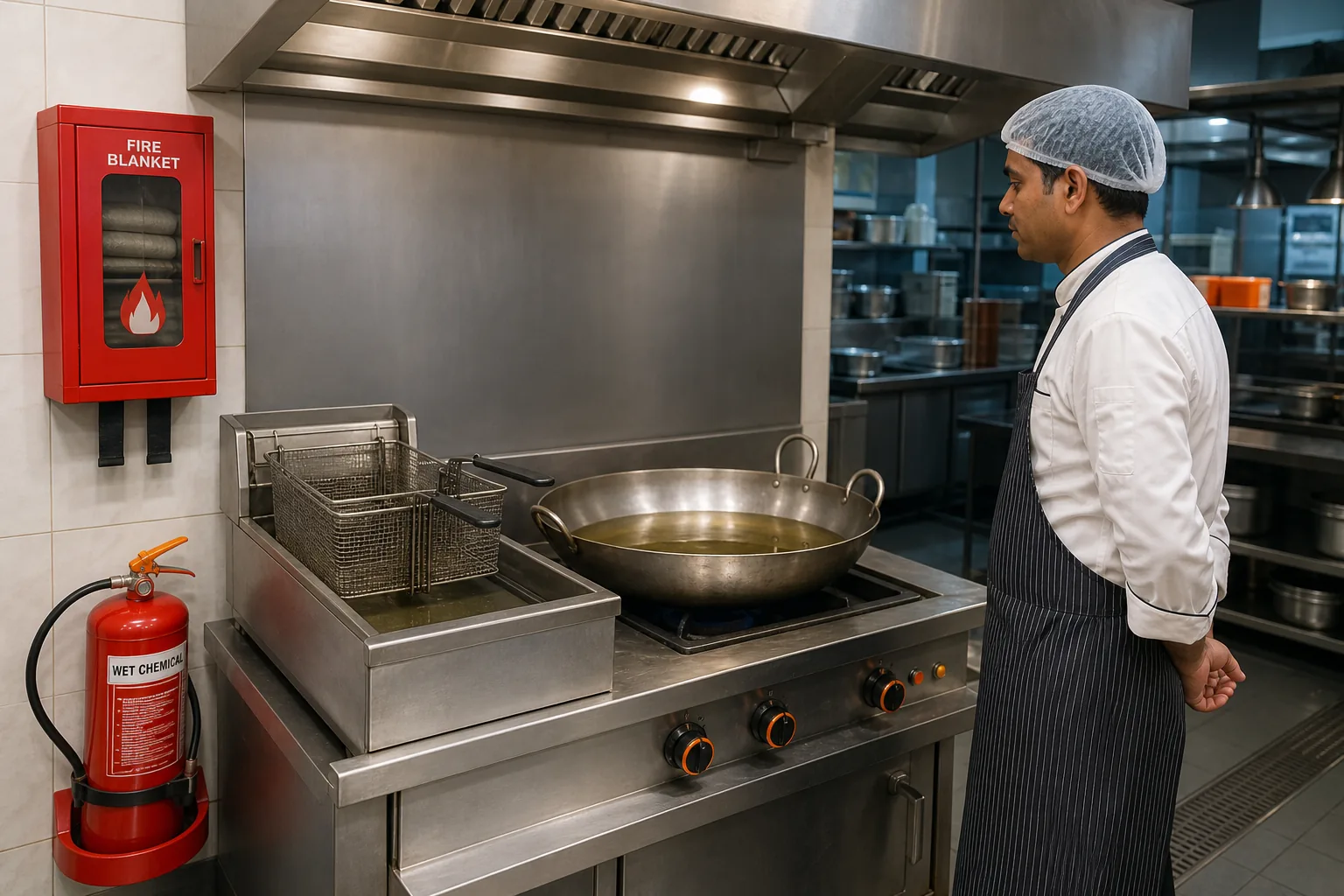
Class F fires involve cooking oils and fats at high temperature. They are common in restaurants, hotels, cloud kitchens, canteens, food courts and industrial kitchens.
Never put water on a hot-oil fire. It can cause violent splashing and rapidly spread burning oil. Wet-chemical extinguishers are designed to cool the oil and help prevent re-ignition.
Electrical Fires: A Special Risk
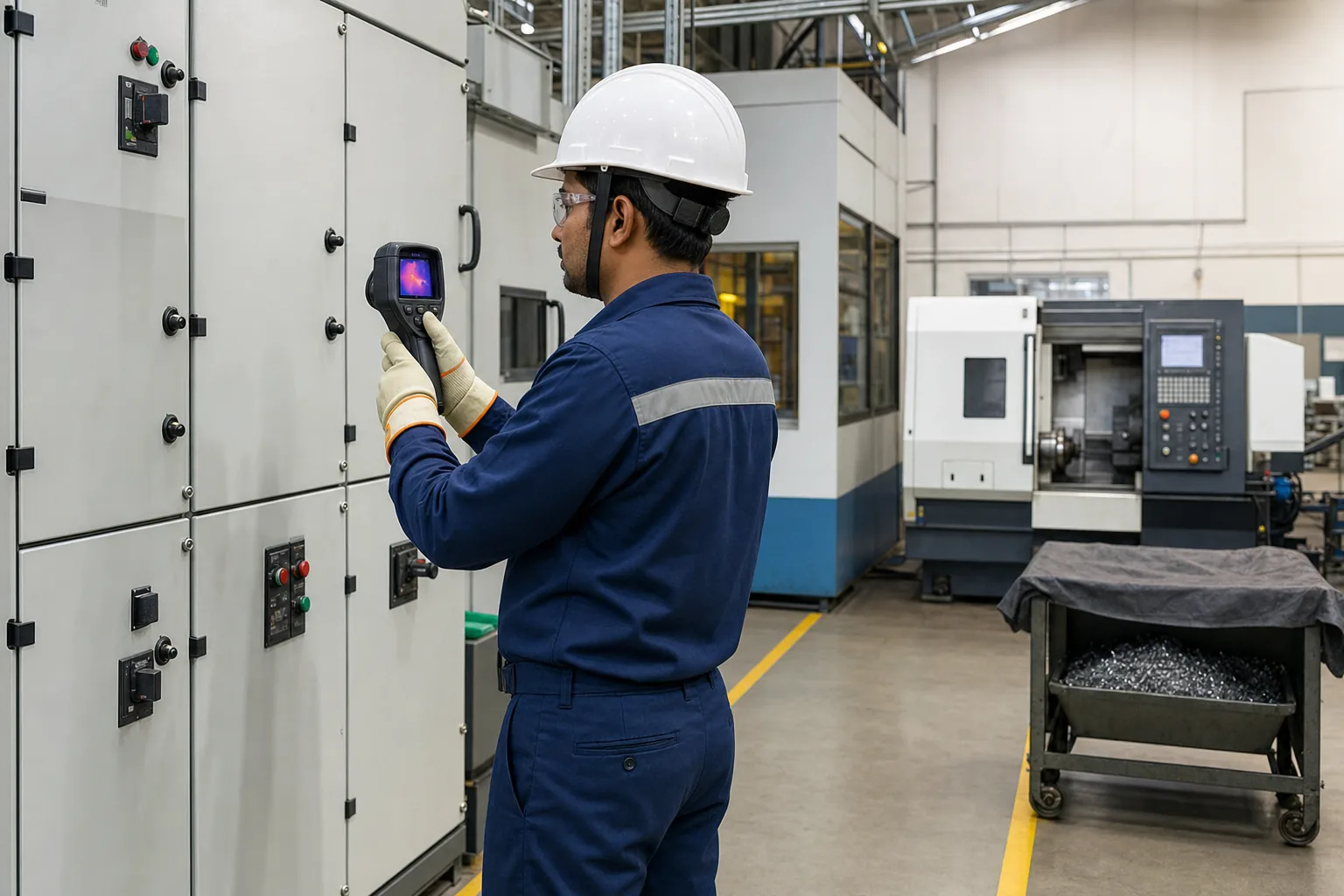
Electrical fire risks may involve live panels, switchboards, wiring, UPS rooms, server rooms, motors, control panels and distribution boards. The immediate danger is electric shock.
Water and ordinary foam should not be applied to live electrical equipment. CO₂, clean-agent or suitable dry-powder extinguishers may be selected according to the equipment and room. Where possible, trained personnel should isolate power first; after isolation, treat the remaining fire according to the material that is actually burning.
Why Choosing the Right Extinguisher Matters
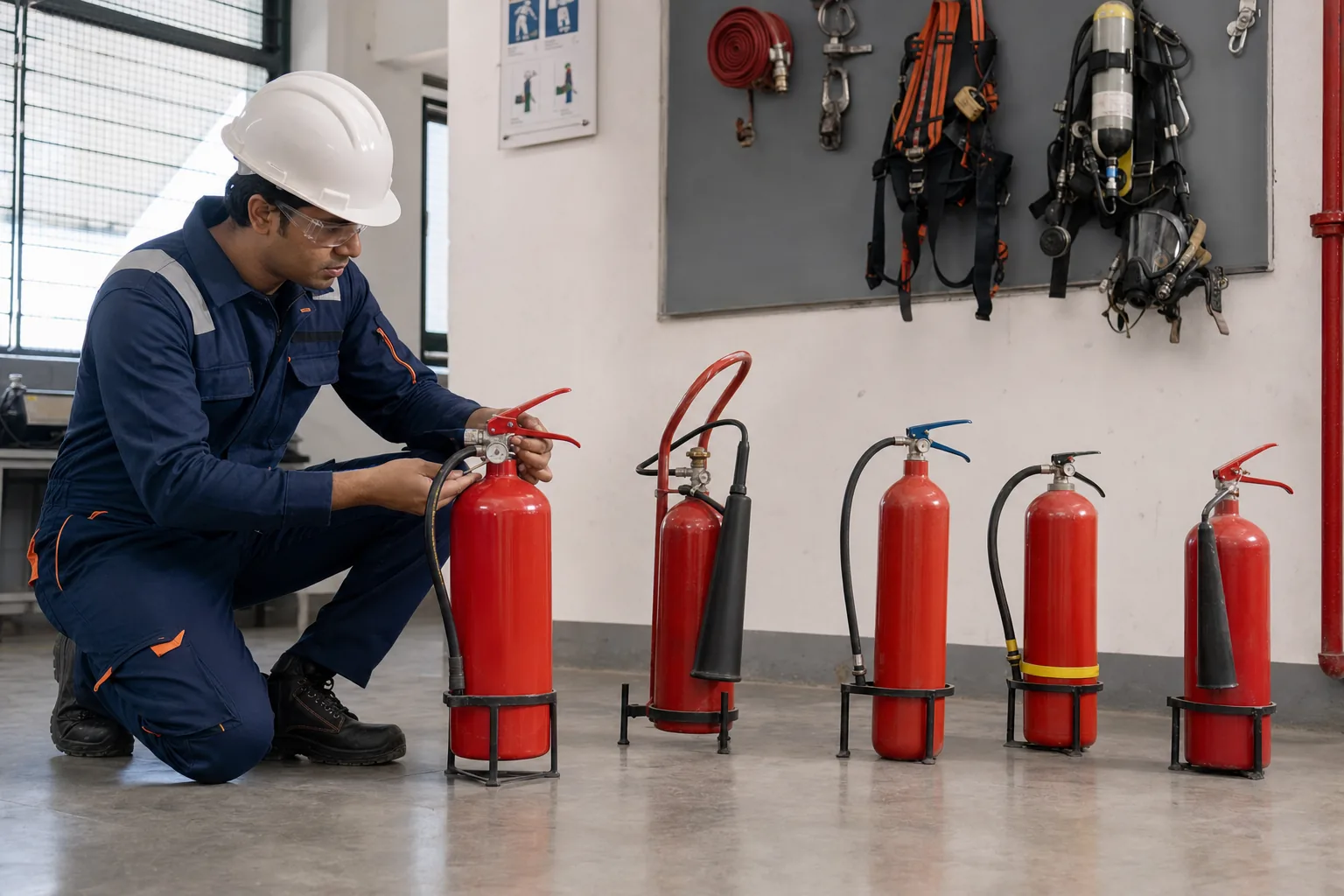
A fire extinguisher is not a universal tool. The wrong unit can:
- Spread the fire
- Cause electric shock
- React dangerously with burning material
- Damage sensitive equipment
- Fail to stop re-ignition
- Put the user and nearby occupants at risk
For example, water may work on some paper or wood fires, but it is dangerous on live electrical panels and hot cooking oil. A general-purpose ABC extinguisher may also be unsuitable for a commercial deep-fryer fire.
Before You Attempt to Use an Extinguisher
- Raise the alarm and ensure emergency services are being contacted
- Only attempt to control a small, contained fire if you are trained and the correct extinguisher is available
- Keep a clear escape route behind you and never let the fire block your exit
- Evacuate immediately if smoke is heavy, the fire is spreading, the extinguisher is ineffective or you are unsure of the hazard
- Never take personal risk to protect property
Simple Fire-Class Checklist for Your Building
- Do you store paper, cartons, packaging, wood or cloth?
- Do you store diesel, petrol, paints, solvents or chemicals?
- Do you use LPG, CNG, propane or acetylene?
- Do you have electrical panels, UPS rooms, server rooms or control rooms?
- Do you operate a commercial kitchen or deep fryer?
- Do you handle metal powder, shavings or combustible metals?
- Are extinguishers positioned near the hazards they are rated to cover?
- Are staff trained and are extinguishers inspected and maintained regularly?
If any answer is unclear, the building needs a professional fire-risk review rather than a one-size-fits-all extinguisher purchase.
Final Takeaway
The fire class determines the correct response. Most buildings face Class A, Class B and electrical risks, while kitchens may add Class F hazards and industrial facilities may also have Class C or Class D risks.
Extinguishers should be selected for the actual hazards, occupancy and applicable requirements—not only by price or availability. Firetech Safety Systems provides fire extinguisher supply, refilling and risk-based selection for offices, factories, warehouses, commercial kitchens and industrial facilities. Contact our Hyderabad team for a site assessment.
Sources and Standards
Classification and extinguisher guidance was checked against the Bureau of Indian Standards product-manual resources for IS 15683:2018 and the Directorate General Fire Services overview of NBC 2016 Part 4: Fire and Life Safety. Final equipment selection must follow the extinguisher rating and instructions on the certified unit and a competent site assessment.
Frequently Asked Questions
What are the main classes of fire in India?
The main fire-test classes used in Indian portable-extinguisher guidance are Class A, B, C, D and F. Live electrical equipment is treated as a special shock and equipment hazard.
Which extinguisher is used for electrical fires?
CO₂, clean-agent or suitable dry-powder extinguishers may be used for live electrical equipment, depending on the equipment and site. Water and ordinary foam should not be used while equipment is energised.
Which extinguisher is used for kitchen oil fires?
Wet-chemical extinguishers are designed for Class F cooking-oil and fat fires. Water must never be used on hot cooking oil.
Which extinguisher is best for offices?
Many offices use ABC dry-powder extinguishers for general risks and CO₂ extinguishers near electrical equipment, but the correct mix should follow a site-specific fire-risk assessment.
Why is fire classification important?
Fire classification identifies the burning fuel so the correct extinguishing agent can be chosen. Using the wrong extinguisher can spread the fire or create additional danger.